



VIKAS SHARMA
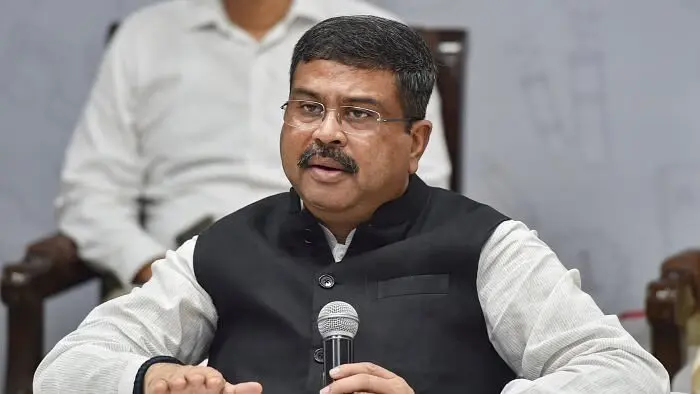
JAMMU, SEPT 21: Union Education Minister Dharmendra Pradhan’s announcement to introduce skill-based learning in the senior secondary curriculum has struck a chord in Jammu and Kashmir, where the education system is battling deep-rooted challenges. Speaking at IIT Madras on Sunday, Pradhan said Classes 11 and 12 students will soon study skill-oriented subjects as part of their mainstream curriculum, marking a significant policy shift under the National Education Policy (NEP) 2020.
Pradhan emphasised that the existing system was too focused on certificates and degrees, often sidelining the real purpose of education—building competence. Stressing Prime Minister Narendra Modi’s vision of combining certification with practical skills, the minister revealed that skill-based learning will not remain optional but will be introduced as a formal subject from Class 6 onwards.
Hope Amid Worrying Numbers
This announcement comes close on the heels of the PARAKH Rashtriya Sarvekshan 2024 National Report, which exposed worrying gaps in J&K’s school education system. As reported exclusively by IMCSD Herald on September 20, several districts of J&K—Reasi, Rajouri, Bandipora, Udhampur, and Samba—figured among the lowest performers nationally.
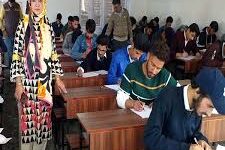
Students across these districts fared poorly in Mathematics and Science, struggling with fractions, algebra, and measurement. The gaps widened in higher classes: Grade 9 students lagged behind in geometry, algebraic applications, and data interpretation. Experts concluded that students were unable to connect classroom knowledge with real-life applications, leaving them ill-prepared for higher studies or professional careers.
“Students here can read and write but often fail to apply knowledge in real-world situations. This mismatch between academics and practical skills makes it difficult for them to succeed in higher studies or the job market,” said an educationist from Jammu University.
Why Skills Matter for J&K
Jammu and Kashmir already struggles with one of the highest youth unemployment rates in the country. Educationists believe skill-based courses can bridge the gap between academic degrees and employability.
The NEP 2020’s thrust on experiential learning—covering digital literacy, financial awareness, communication skills, entrepreneurship, vocational training, and coding—appears tailored to meet the region’s urgent needs. Experts argue that integrating these subjects early can prepare students to compete not just nationally but globally.
“The findings of PARAKH must act as a wake-up call for policymakers in J&K. Unless schools move beyond textbooks and adopt courses in entrepreneurship, coding, media literacy, and soft skills, the youth will continue to face limited opportunities,” said an education policy analyst.
Persistent Inequities
The PARAKH report also highlighted inequalities within the UT itself. Students in urban areas consistently outperformed their rural peers, while Scheduled Tribe communities ranked the lowest across subjects. These disparities, experts say, can be reduced if skill-based learning provides every child—irrespective of background—an equal chance to acquire competencies valued in the economy.
Educationists stress that if executed earnestly, this reform could change the trajectory of J&K’s youth. Schools would no longer produce just “exam pass-outs” but nurture future-ready professionals capable of adapting to the evolving demands of the job market.
A Historic Opportunity
The government’s plan to make skill-based learning an integral part of the education system is more than a policy shift—it is a lifeline for regions like Jammu and Kashmir. The challenge remains steep, but the opportunity is historic.
If implemented with seriousness and vision, the integration of skill-based education into senior secondary classes could finally break J&K free from the cycle of weak academics and high unemployment. It could transform classrooms into incubators of talent, equipping young people not only with knowledge but also with the skills to shape their own future.
For thousands of students across the Union Territory, this reform may just be the beginning of a new era—where education does not end with a certificate but begins with competence.