



VIKAS SHARMA
JAMMU, NOV 1: Despite tall claims by successive governments about transforming urban infrastructure and sanitation, the latest Swachh Survekshan 2025 rankings have once again highlighted the widening gap between India’s ambitious Smart City promises and the ground realities of cleanliness on the streets.
According to the official report released by the Ministry of Housing and Urban Affairs (MoHUA), Srinagar has been ranked 9th among India’s dirtiest cities in the category of cities with over one million population, scoring 7,488 points. The ranking places the summer capital of Jammu and Kashmir among the country’s lowest-performing urban centres, despite years of government-funded initiatives under the Swachh Bharat Mission (Urban) and the Smart City Project.
The findings serve as a wake-up call for civic bodies in Jammu and Kashmir to translate their cleanliness promises into tangible action — ensuring that rapid urban expansion does not come at the cost of public hygiene and environmental sustainability.
Urban Decay Behind the Numbers
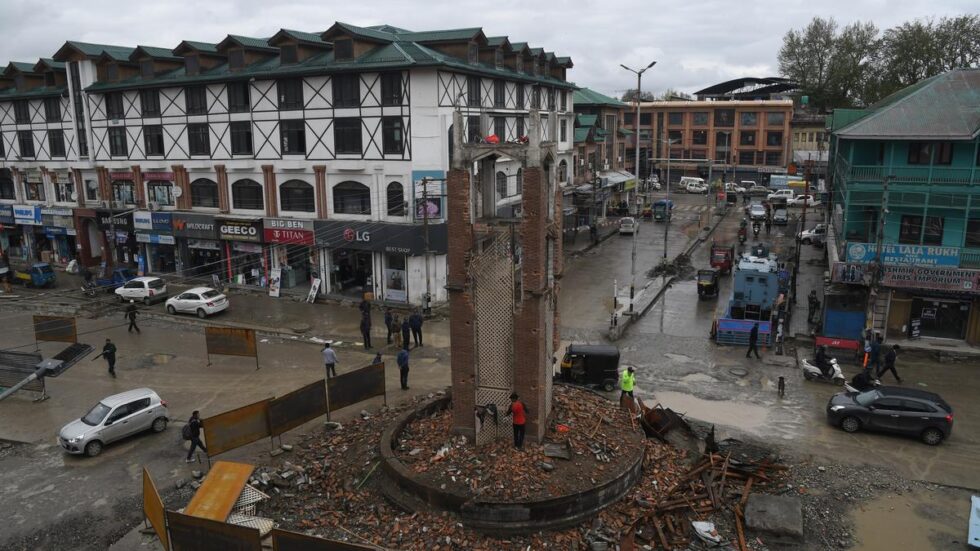
Srinagar’s poor ranking reflects persistent challenges such as unscientific waste disposal, poor segregation, and irregular garbage collection, particularly in congested and heritage zones. Overflowing bins, open dumping along roadsides, and mounting pollution around water bodies like Dal Lake continue to tarnish the city’s image as a major tourist destination.
While Srinagar finds itself among the bottom-ranked cities, Jammu, the winter capital of the Union Territory, has performed only marginally better — though it failed to secure a place among India’s top clean cities. Urban experts suggest that both cities can learn from successful models by strengthening waste segregation at source, enforcing anti-littering laws, and engaging public-private partnerships for sustainable waste management.
Small Cities Shine Where Metros Struggle
Ironically, while major metros such as Bengaluru, Chennai, and Delhi are struggling with waste and pollution, several smaller and mid-sized cities have shown remarkable progress. Cities like Indore, Surat, and Navi Mumbai continue to set national benchmarks in cleanliness and civic discipline.
For the seventh consecutive year, Indore has retained its position as one of India’s cleanest cities under the Super Swachh League category.
India’s Top 10 Dirtiest Cities in 2025 (Over One Million Population)
- Madurai – 4,823
- Ludhiana – 5,272
- Chennai – 6,822
- Ranchi – 6,835
- Bengaluru – 6,842
- Dhanbad – 7,196
- Faridabad – 7,329
- Greater Mumbai – 7,419
- Srinagar – 7,488
- Delhi – 7,920
About Swachh Survekshan
Swachh Survekshan is India’s flagship urban cleanliness ranking programme, conducted annually by MoHUA under the Swachh Bharat Mission (Urban).
Launched in 2016, the survey aims to encourage cities to improve sanitation, waste management, and hygiene through citizen participation and performance-based competition.
It has grown into the world’s largest urban sanitation survey, covering over 4,800 cities and towns by 2024, and engaging millions of citizens through feedback and digital platforms.
The Swachh Bharat Mission itself was launched on October 2, 2014, by Prime Minister Narendra Modi, inspired by Mahatma Gandhi’s vision of a clean India.
Under the mission, Swachh Survekshan serves as an evaluation tool to monitor progress, identify gaps, and reward cities for innovation and efficiency in urban cleanliness management.