



VIKAS SHARMA
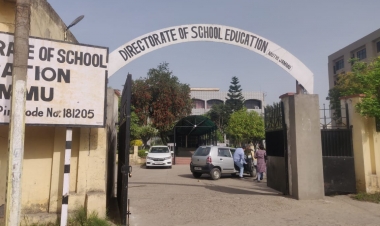
JAMMU, SEPT 8: In the wake of severe monsoon rainfall that led to disruptions across Jammu and Kashmir, the Directorate of School Education Jammu (DSEJ) on Tuesday issued an order mandating strict safety protocols before schools reopen for offline classes.
The order, signed by Dr. Naseem Javaid Chowdhary, Director School Education, Jammu, directs all government and private schools to obtain a valid structural safety certificate from the competent authority before resuming physical classes.
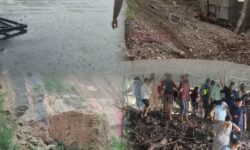
The decision follows weeks of heavy rainfall that resulted in waterlogging, landslides, and structural concerns in several parts of the Union Territory. Several schools had to be temporarily shut to ensure the safety of students and staff amid concerns over damaged infrastructure and unsafe buildings.
According to the order, Heads of Institutions (HOIs) and School Management Committees are required to conduct a comprehensive safety audit of school buildings. The audit must evaluate structural stability and overall preparedness before resuming classes. A detailed report must be submitted to the concerned authority for review and approval.
The government has clarified that no school shall commence offline teaching until a valid safety certificate is issued. In cases where the school’s infrastructure is deemed structurally sound and safe without requiring further audits, the respective HOI or School Management Committee must provide an undertaking certifying the same. This declaration must be submitted to the Chief Education Officer (CEO) or the Zonal Education Officer (ZEO) prior to reopening.
Dr. Naseem Javaid Chowdhary emphasized that student safety remains the top priority and that this directive is in line with ensuring schools are fully prepared to handle unforeseen risks. “The safety and wellbeing of students and school staff are paramount. The department is committed to ensuring that educational activities resume only when infrastructure is secure,” he stated.
School closures amid extreme weather
The monsoon season this year saw unprecedented rainfall across Jammu and Kashmir, resulting in flash floods, water seepage, and structural damage to public infrastructure. Several educational institutions had reported cracks in walls, weakened foundations, and hazardous conditions, prompting district administrations to close schools temporarily. The closures affected students from primary to higher secondary levels, delaying academic schedules and examinations.
Parents and teachers had raised concerns over the safety of school buildings, especially in rain-prone areas. Schools located near hilly terrains and low-lying regions were particularly at risk. The administration’s order aims to address these concerns through systematic inspection and certification processes.
Implementation and Monitoring
The order has been circulated to divisional and district education offices, joint directors, and chief education officers for immediate compliance. The Information Department has been tasked with widely publicizing the directive through print and electronic media to ensure awareness. The concerned departments are also required to submit daily reports regarding the status of structural audits and safety certifications.
The department has further instructed its website in-charge to upload the order for transparency and access to stakeholders.
As schools prepare for reopening, this directive reinforces the importance of infrastructure audits and safety compliance, ensuring that the learning environment is secure for all students.