



VIKAS SHARMA
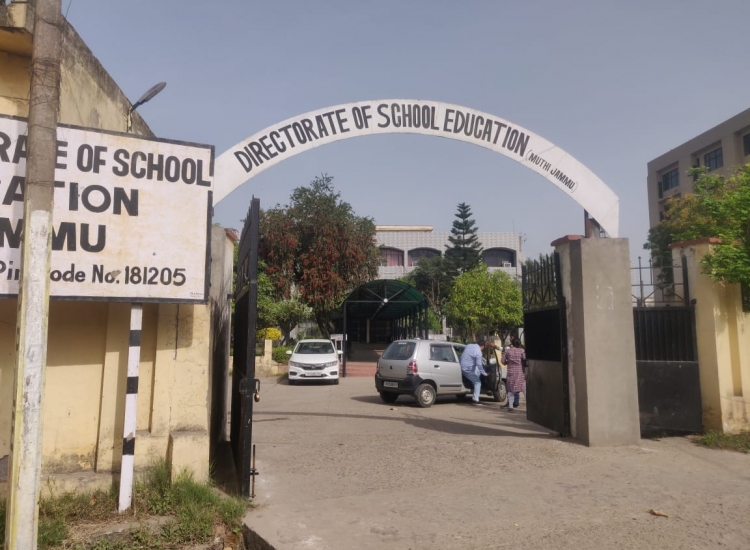
JAMMU, SEPT 9: Confusion and uncertainty spread across educational institutions in Jammu and Kashmir on Tuesday after the Directorate of School Education Jammu (DSEJ) issued an order mandating mandatory structural safety certification before schools can reopen for offline classes.
The DSEJ’s directive, while rooted in a genuine concern for student safety, has inadvertently created confusion and halted academic activities across the Union Territory.
Schools that had planned to resume classes from Wednesday found themselves grappling with the implications of the directive, with many now hesitant to restart academic activities until the required audits and certifications are completed.
The order, signed by Dr. Naseem Javaid Chowdhary, Director School Education Jammu, aims to ensure the safety of students and staff after weeks of relentless monsoon rains caused landslides, waterlogging, and damage to school infrastructure. While the directive underscores the government’s commitment to prioritizing student welfare, its sudden announcement without sufficient preparatory guidance has left many schools unsure about how to proceed.
Several heads of schools, especially in rural and rain-affected areas, expressed concern over how quickly they can conduct structural audits and obtain certificates. “We were all set to welcome students tomorrow, but this new directive has left us scrambling,” said a principal of a school. “We are now trying to arrange engineers and structural experts, but it’s not something that can be done overnight.”
Some private schools, which had already sent circulars to parents regarding reopening, have now postponed classes indefinitely, awaiting clarity from authorities. “The safety certificate requirement is understandable,” said a principal from a private school, “but the process and timeline are unclear. We need guidance on how to proceed without disrupting students’ education further.”
Adding to the confusion, several school management committees admitted that they are unsure which authority is eligible to issue the certificate. “Should we approach the local PWD office or a private structural engineer?” one committee member asked. “There’s no clarity on whether government empaneled agencies alone will be recognized or if we can hire accredited professionals independently.”
In some cases, schools are struggling to gather the necessary documentation, such as building plans, prior maintenance records, and safety reports that engineers require to issue a valid certification. Schools without prior audits fear that the process may take weeks.
“We have no recent inspection reports,” said the administrative head of a school in Udhampur. “Getting everything done in time seems impossible, and we are worried about losing students’ trust.”
School managements are also debating the liability aspect. “If we issue an undertaking certifying safety without proper inspection and something goes wrong later, will the management be held responsible?” asked one principal. The absence of official guidelines addressing liability and procedural steps is causing hesitation and internal debate in staff meetings.
In several schools, staff members are worried about increased workload as they try to coordinate inspections, collect reports, and inform parents. “We already have limited staff, and now we are being asked to arrange audits, fill forms, and submit reports in a short span,” said an administrator from a government school. “This is putting enormous pressure on teachers who are already stressed due to academic delays.”
The education department has instructed all divisional and district offices to monitor compliance and submit daily reports, while the Information Department has been tasked with creating awareness through media channels. The order is also being uploaded online for stakeholders’ reference.
Dr. Naseem Javaid Chowdhary reiterated that student safety is the foremost priority, stating, “No school should take risks that could endanger lives. We are ensuring that all schools are fully prepared before reopening.”
Parents have voiced frustration over the lack of coordination and communication. “Children’s education is already delayed due to extreme weather,” one parent remarked. “Now this new order, without proper planning, is adding to the uncertainty.”
Some school managements are considering calling emergency meetings to discuss possible solutions, while others are reaching out to district education offices for written instructions. “We need a uniform process,” said a committee member from a school, “otherwise every school will adopt its own interpretation, and confusion will only increase.”
A few schools have resorted to temporarily shifting classes online, but the lack of adequate digital infrastructure in rural areas has limited the effectiveness of this solution. “Not all students have access to mobile devices or internet connections,” a headmaster pointed out, “and prolonged closure is only widening the education gap.”
The DSEJ’s directive, while rooted in a genuine concern for student safety, has inadvertently created confusion and halted academic activities across the Union Territory. Administrators, parents, and teachers await further clarification and structured guidance to ensure that safety protocols do not become an obstacle to education.