



RUPALI SUBHASH
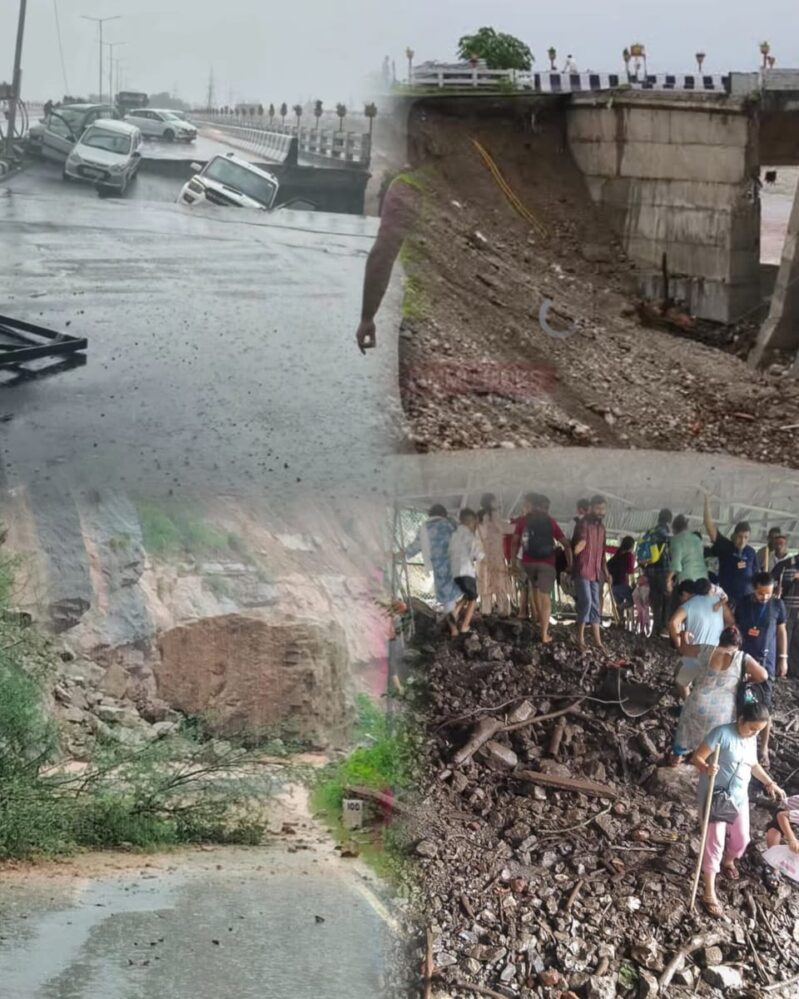
JAMMU, AUG 29: Jammu and Kashmir’s recent deluge was not just a monsoon tragedy—it was a man-made disaster. Torrential rains, swollen rivers, and landslides have devastated communities, but the root causes run deeper: unchecked human activity, illegal exploitation of natural resources, and systemic neglect. Even tragedies like the deaths of pilgrims to Vaishno Devi and Chishoti, though highly visible in media, are only the tip of a much larger, state-wide crisis.
Illegal Mining: Tawi’s Silent Killer
Illegal mining is alarmingly close to water filtration plants, pumping stations, bridges, roads, and forest belts, destabilizing riverbeds, triggering soil erosion, and undermining protective embankments. Despite a High Court ban, mining continues unabated along the Tawi River. Reports from May 2025 reveal tractor trolleys extracting sand in broad daylight, just 200–300 meters from the main Tawi bridge in Jammu City. Authorities acknowledge that mining mafia operators often act with impunity, highlighting a systemic failure of enforcement.
In 2021, the Jammu & Kashmir government constituted a committee to examine illegal mining and stone crusher operations along the Tawi. Its mandate was to investigate malpractices and recommend measures, yet enforcement remains weak, allowing violations to continue unabated.
Encroachments: A Statewide Crisis
Over 2.15 lakh acres of state land, valued at more than ₹18,000 crore, are illegally occupied in Jammu and Kashmir. While the government has reclaimed over 1.92 lakh acres, large portions remain under encroachment.
Climate Change: A Growing Threat
The region’s vulnerability is worsened by climate change. Erratic rainfall, glacial melt, and shifting weather patterns have increased the frequency and intensity of floods and landslides. In 2023, the Thathri land subsidence in Doda displaced hundreds, while Chishoti and other areas continue to witness destructive landslides,floods and cloud bursts These events highlight how human neglect amplifies natural hazards, transforming them into catastrophes.
The Way Forward: A Call for Responsibility and Action
Jammu and Kashmir’s survival depends on decisive, coordinated, and immediate action. This is not just governance—it is a moral duty.
Strict Enforcement and Accountability: Illegal mining and encroachments must be stopped with zero tolerance. Violators should face immediate consequences, and regulatory bodies must be empowered with technology and manpower for real-time monitoring.
Community as Custodians: Local communities are the frontline defenders of the state’s fragile ecology. Conservation, afforestation, riverbank restoration, and disaster preparedness programs can foster a culture of stewardship.
Sustainable and Smart Development: Urban expansion and infrastructure must respect natural landscapes. Hill slopes, floodplains, and riverbanks should remain inviolate, with building codes and land-use regulations prioritizing safety and ecological balance over profit.
Climate Resilience and Early Warning Systems: The state must invest in predictive flood modeling, glacial monitoring, and real-time early warning systems. Emergency infrastructure, evacuation plans, and climate-adapted housing can prevent natural events from becoming disasters.
Jammu and Kashmir’s landscapes are fragile yet breathtaking. Respect for nature, paired with responsible governance and community stewardship, is the only way to prevent human-invited tragedies from claiming more lives. The warnings are clear—history, nature, and climate will not forgive negligence.